
Chasing Late Invoices Without Damaging Client Relationships: A Freelancer Payment Recovery Playbook
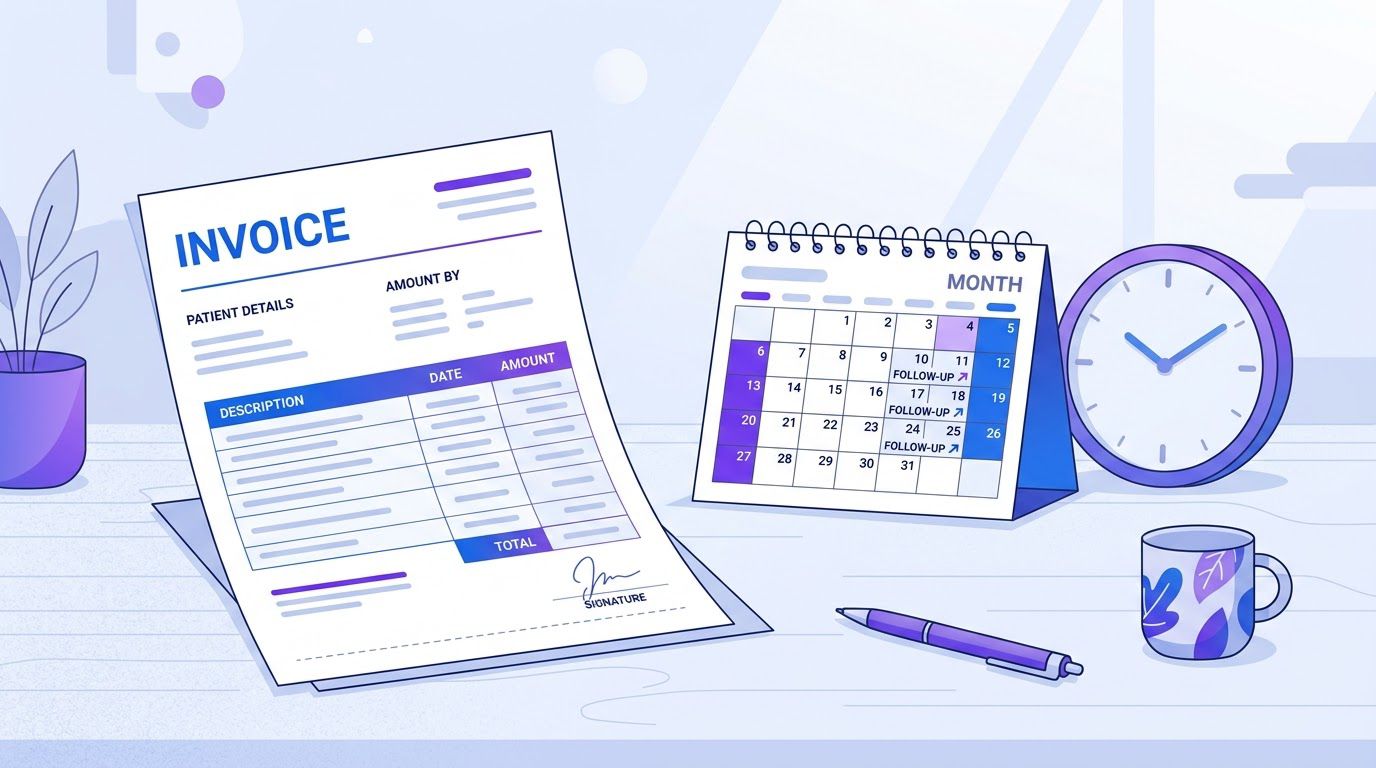
Picture a freelance designer, call her Mira, who delivered a brand identity project five weeks ago. The invoice for $3,200 was due 38 days ago. She has sent one message that said "just checking in." The client replied "will get to it," and nothing has happened since. Mira is not sure whether to write again, call, stop working on the client’s other tasks, or let it go. She is mostly afraid of seeming rude. (This is an illustration, not a case study.)
Advice on late invoices usually comes in two flavors. One is legalistic: send a demand letter and threaten to sue. The other is naive: stay friendly and hope. Neither helps Mira. This guide gives you a graded system with six levels, from a polite overdue invoice reminder email on day one to a final demand around day 45, with a written script for each level, the contract clauses that prevent most of the problem, a plain-language look at US rules, and a way to decide when to stop chasing and write the invoice off.
A note on what this is. The framework and the scripts are ours, built on public sources (listed at the end with the date we read each one) and common freelance and small-agency practice. We have not tested these scripts on live collections and have no recovery-rate data of our own, so none is claimed. Every client name, amount and result in an example is invented and labeled. This is general information, not legal advice, and the law varies by state.
- Most late payment is not hostility. It is a missed invoice, a stuck approval or a cash-flow squeeze. Start from that assumption and escalate only when you have evidence it is wrong.
- Use six levels with fixed days: reminder on day 1, follow-up on day 7, a call on day 14, a service pause on day 21, a late fee on day 30 and formal recourse on day 45, counted from the due date.
- Write the script before you need it. The awkwardness is what delays most people, and a pre-written message removes it.
- Prevention does most of the work: a signed contract, a deposit, milestone billing, a late fee clause and a right to pause work.
- Decide in advance when to stop. Chasing has a cost in time and attention. A written rule keeps you from throwing good hours after a bad invoice.
- The data: late B2B payments and what they do to freelance cash flow
- How to chase unpaid invoices: a graded system of six levels
- The scripts: wording for every level
- Prevention: the clauses and habits that stop most late payment
- What US law says, without the jargon
- The hard decision: when to write it off and stop working with the client
- Automating the chase without turning it into spam
- A ten-day setup plan
- When it is time to hand it to someone
- Frequently asked questions
- Sources
The data: late B2B payments and what they do to freelance cash flow
You are not imagining it. Atradius, a credit insurer, publishes a yearly survey of B2B payment practices. Its 2026 report on the US (published September 17, 2026, read November 6, 2026) says late payments affect an average of 22% of B2B receivables, and that 55% of US suppliers report customers delaying invoice payments. It also says US companies often report losing 1% to 2% of B2B invoices to bad debt, and that most customers pay overdue invoices within a month after the due date, so suppliers typically collect cash about two months after invoicing. The page does not state the sample size. Treat these as survey results about companies in general, not a prediction for your clients.
Two things stand out. First, late is common, so a late invoice is not a verdict on you. Second, most late invoices do get paid, and usually not long after the due date. That is why a gentle, persistent first stage works for most cases, and why the aggressive stages should be rare.
Why it hurts a freelancer more than a company
A company that waits two months for a payment has a finance department, a line of credit and other income. A freelancer or a five-person agency often has rent, tools and your own pay depending on a few invoices. A late invoice is, in effect, an interest-free loan to your client that you are funding.
Two calculations to make it concrete
Numbers are invented. Replace them with yours. The formula for the average extra cash tied up at any moment is: monthly billing × share of invoices paid late × (average days late ÷ 30).
| Item | Value |
|---|---|
| Monthly billing | $6,000 |
| Share of invoices paid late | 25% |
| Average days late | 20 |
| Late invoice value each month | $6,000 × 25% = $1,500 |
| Average extra cash tied up | $1,500 × (20 ÷ 30) = $1,000 |
Now the second number: how long one overdue invoice can carry you. If Mira is owed $3,200 and her monthly business expenses are $4,000, the overdue amount equals $3,200 ÷ $4,000 = 0.8 months, or about 24 days of expenses. The invoice is not just late money. It is nearly a month of runway.
And the time cost: five follow-ups at about 15 minutes each is 75 minutes. At a $60 hourly rate that is $75 of unpaid time spent chasing a single invoice, before any call or letter.
Your own version of these numbers is worth working out once. It tells you how much a prevention clause is worth and how long you can afford to wait before a firmer step. If you want a reminder system that tracks overdue invoices in a sheet and chases them on a schedule, the Request a Custom Workflow page is where you describe it and get a quote.
How to chase unpaid invoices: a graded system of six levels
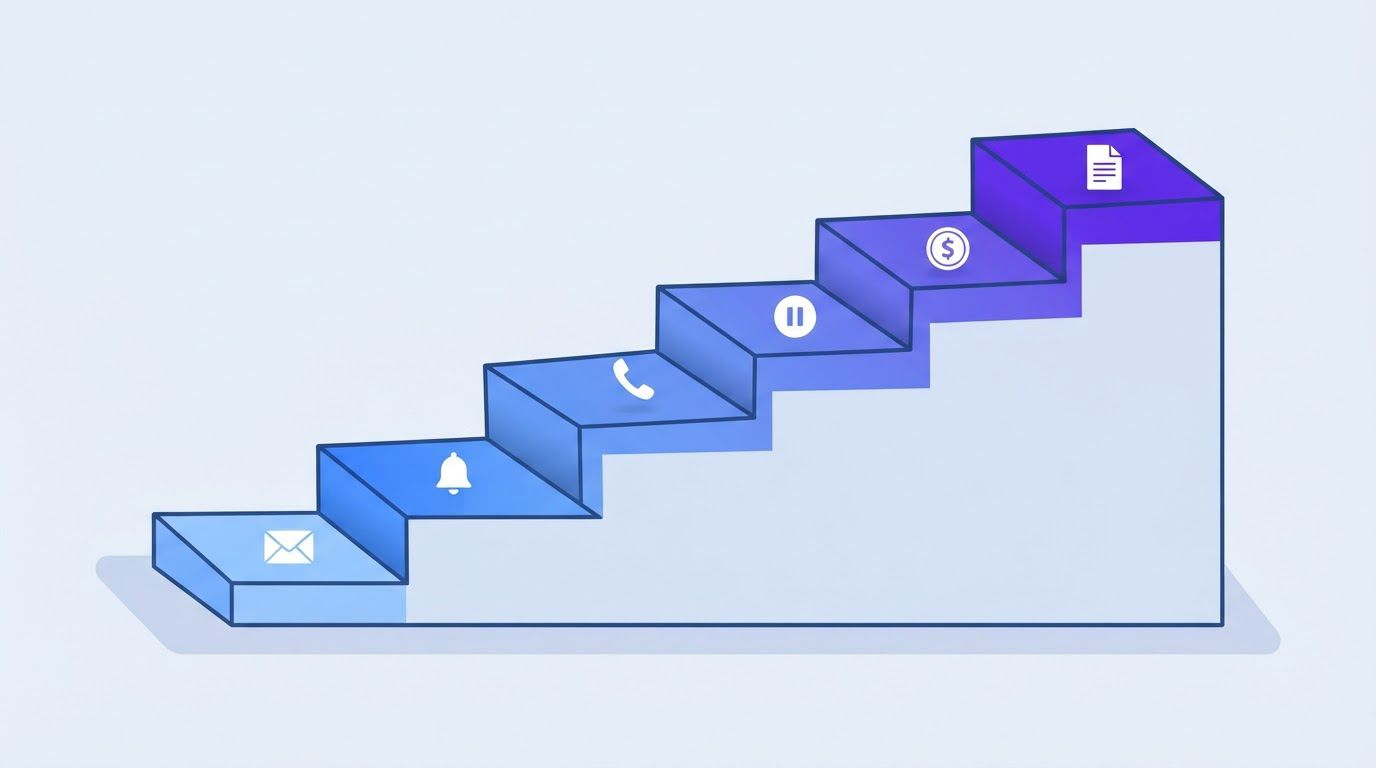
The system has six levels. Each level has a trigger (a number of days after the due date), a channel, a goal and a gate, which is the condition that must be true before you move to the next level. Days are counted from the due date, not the invoice date.
| Level | Day | Channel | Goal | Tone |
|---|---|---|---|---|
| 1. Gentle reminder | Day 1 | Make sure the invoice was received and is not stuck | Friendly, assuming a mix-up | |
| 2. Follow-up | Day 7 | Email, same thread | Get a specific payment date | Warm and clear |
| 3. Call | Day 14 | Phone or video, then confirm in writing | Find out the real reason and agree on a date | Direct, curious, calm |
| 4. Service pause | Day 21 | Written notice | Pause new work until payment, as your contract allows | Firm and neutral |
| 5. Late fee | Day 30 | Written notice with a revised invoice | Apply the fee in your contract and set a final date | Formal, factual |
| 6. Recourse | Day 45 | Final demand letter | Start collection or a small claims case if unpaid | Formal, with consequences stated |
Find out why before you escalate
The right next step depends on which of four situations you are in. Ask early, and write down what you learn:
| Situation | What it sounds like | What helps |
|---|---|---|
| Did not see it | "I never got that invoice." | Resend to the right person, confirm receipt, ask for a date. |
| Process delay | "It is with accounting / waiting for approval." | Ask who approves, by when, and whether a PO or form is missing. |
| Cannot pay yet | "Cash is tight this month." | Offer a short payment plan in writing. A partial payment on a date is better than silence. |
| Dispute | "The work was not what we agreed." | Pause chasing. Move to a written discussion of the scope, and pay or credit the undisputed part. |
A dispute is the one case where chasing harder is the wrong move. If the client has a real complaint, a pressure letter will harden positions. Separate the disputed amount from the undisputed amount and ask for payment of the latter.
Gates: when to stay at a level, and when to move on
- Stay at the current level if the client has replied with a specific date within the next seven days and you have confirmed it in writing.
- Move up one level when a date passes without payment or when the client goes silent for the stated period.
- Skip to level 3 (a call) for large invoices, or for a client who has already shown a pattern of paying late. A pattern is two or more late invoices in a row.
- Slow down if the client is in the middle of a dispute, a bereavement or an emergency you know about. Patience here protects the relationship, and the system will still work in two weeks.
- Starting too late. An invoice that is 50 days late and has had no reminder is far harder to raise than one that was nudged on day 1.
- Vague asks. "Let me know when you can pay" gets a vague answer. "Can you confirm a payment date by Friday?" gets a date.
- Mixing the relationship and the invoice. Keep project and invoice conversations separate, so a fight about one does not poison the other.
- Threatening something you will not do. If you say you will pause work or go to small claims, you must be ready to do it. Otherwise do not say it.
- Doing it all from memory. Track due dates and levels in a sheet, not in your head.
The scripts: wording for every level
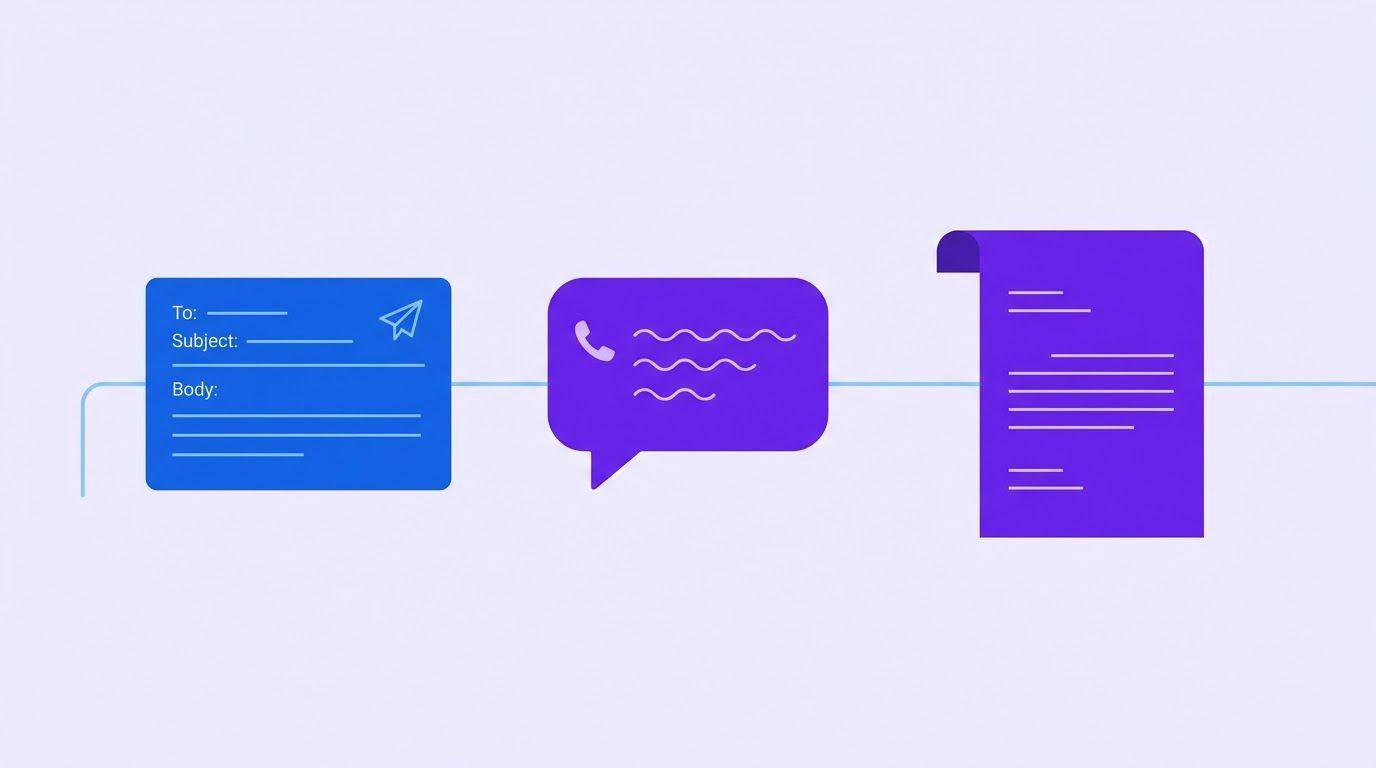
The scripts below are starting points we wrote for this guide and have not tested on live collections. Adapt the wording to your voice and your contract. Text in square brackets is for you to fill in. Every example keeps three habits: it states the facts (invoice number, amount, due date), it asks for one specific thing, and it leaves the client a way to respond without losing face.
Level 1: A polite overdue invoice reminder email (day 1)
Send it the morning after the due date, in the same email thread as the original invoice if possible. Attach the invoice again. This is the cheapest message you will ever send, and it resolves a large share of cases because it fixes the "never saw it" problem without any friction.
Subject: Invoice [number] for [project], due [date]

Hi [Name],

A quick note: invoice [number] for $[amount], due on [date], does not show as paid on my side yet. I have attached it again in case it got buried.

If it is already in process, no action needed. If anything is missing on your end, such as a PO number or a different billing contact, tell me and I will fix it today.

Thanks, and thank you again for the project,
[Your name]
Level 2: The follow-up, with a specific date (day 7)
Subject: Re: Invoice [number] for [project], due [date]

Hi [Name],

Following up on invoice [number] for $[amount], now one week past its due date of [date]. Could you confirm the date I can expect payment? If a Friday works, I will note it as [date].

If there is anything holding it up, I am happy to help sort it out.

Thanks,
[Your name]
The line that matters is "confirm the date I can expect payment." It turns a vague promise into a commitment you can check. When they reply with a date, write back: "Thank you. I have you down for [date]." That short confirmation makes the date real.
Level 3: The call (day 14)
Two weeks past due, switch channels. A call is harder to ignore than an email and lets you find out which of the four situations you are in. Keep it short and curious, and confirm what was agreed in writing straight afterwards.
1. Open: "Hi [Name], I am calling about invoice [number]. Do you have two minutes?"
2. State the facts: "It was due on [date] for $[amount] and I have not seen the payment."
3. Ask, then listen: "Can you help me understand what is holding it up?"
4. Get a date: "What date can I put in my calendar for the payment?"
5. If they cannot pay in full: "Would it help to split it? For example half on [date] and the rest on [date]."
6. Close: "Thank you. I will send you a short email to confirm what we agreed."
Subject: Invoice [number]: what we agreed

Hi [Name],

Thank you for the call today. To confirm: payment of $[amount] for invoice [number] will arrive by [date] via [method]. If anything changes before then, please let me know.

Thanks,
[Your name]
Level 4: Service pause notice (day 21)
This step only works if your contract allows it, which is why Section 4 includes a clause. If it does not, do not claim a right you do not have. You can still choose not to start new work until the invoice is settled, and say so as a business decision.
Subject: Invoice [number]: pausing new work

Hi [Name],

Invoice [number] for $[amount] is now 21 days past its due date of [date]. As set out in section [X] of our agreement, I am pausing work on [project / new requests] until the invoice is paid.

As soon as payment arrives, I will resume and we can pick up where we left off. If there is a reason payment is delayed, please tell me and we can talk about a plan.

Thanks,
[Your name]
Level 5: The late payment fee notice and invoice wording (day 30)
A late fee is a tool, not a punishment, and it only works if it is already in your signed agreement. A fee you add after the fact is far harder to defend. Check your contract and your state’s rules on interest and fees before sending. For wording, state the fee clearly, show the arithmetic and give a new final date.
Subject: Invoice [number]: late fee applied, final date [date]

Hi [Name],

Invoice [number] for $[amount] is 30 days past its due date of [date]. As stated in section [X] of our agreement, a late fee of [rate or amount] applies. The updated invoice is attached: original amount $[amount], late fee $[fee], total due $[total].

I would like to settle this by [date]. If you would like to talk about a payment plan, I am open to it before that date.

Thanks,
[Your name]
A contract says 1.5% per month on overdue balances. On a $3,200 invoice that is 1.5% × $3,200 = $48 for one month. The total due after 30 days past due is $3,248. This is an example only: allowed rates and how fees may be charged differ by state, so check yours before you write the clause.
Level 6: The final demand letter (day 45)
The last written step before you start a formal process. It states what is owed, what you will do if it is not paid, and the date. Send it by email and, if your contract allows, by a method that gives you proof of delivery. Have a lawyer review the wording if the amount is large, or if the client is a company with a legal department.
Subject: Final notice: invoice [number], $[total] due [date]

[Name],

This is a final request for payment of invoice [number] issued on [invoice date] for [description of services], in the amount of $[total] including any late fee provided in our agreement dated [date].

Payment was due on [due date]. I contacted you on [dates of reminders and call]. As of today, I have not received payment.

If I do not receive the full amount by [date, usually 7 to 10 days from now], I will pursue collection, which may include referring the account to a collection agency or filing a claim in [court].

You can pay by [method and details]. If you believe any part of the invoice is in dispute, please tell me in writing by [date] with the specific item.

[Your name]
[Business name and address]
Keep your tone factual. The letter may be read later by a collection agency, a mediator or a judge. Do not include insults, accusations or anything you would not want read aloud.
Three replies to keep ready
Thank you. I have you down for Friday, [date]. If it is going to be later, please tell me before then so we can plan around it.
Thank you for the payment of $[amount], received on [date]. That leaves $[balance] outstanding on invoice [number]. Can you confirm when I can expect the balance?
Thank you for telling me. I would like to understand the issue. Could you send me, in writing, which parts of the invoice you are questioning and why? In the meantime, I would appreciate payment of the portion that is not in question, which is $[amount].
Writing the scripts is the easy part. Remembering to send them on day 1, day 7 and day 14, for every invoice, is where it slips. If you want a workflow that tracks due dates in your sheet and drafts the right message at the right level, describe it on the request page. We review it, send a quote, and you decide whether to go ahead.
A spreadsheet that ranks your repetitive tasks by what is worth automating first. List the task, rate how often it happens, how long it takes, how error-prone it is and how many tools it touches, and the sheet orders your list. Enter your email below and we will send the download link.
Prevention: the clauses and habits that stop most late payment
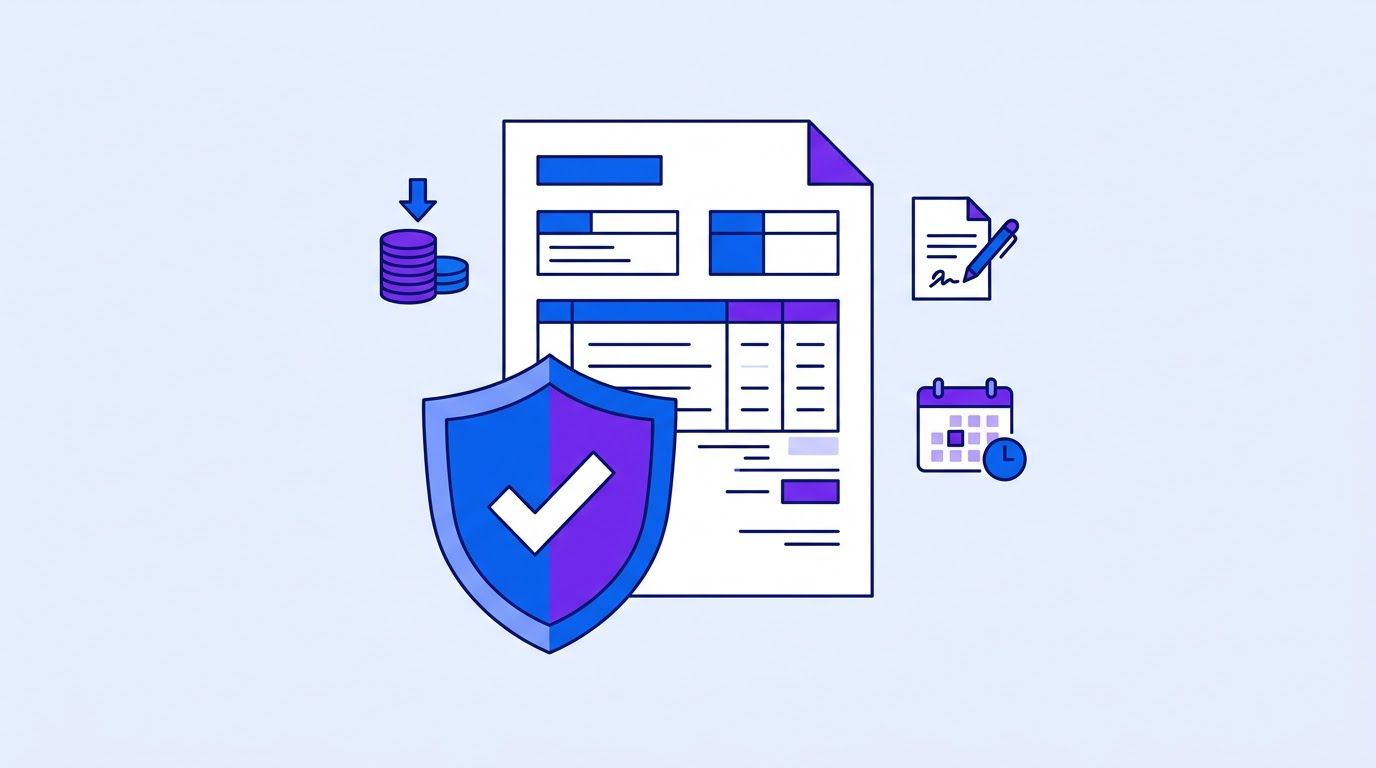
Every level in Section 2 is a repair. Prevention costs less. Here is what to put in place before you start any project.
Habits that change when and how you get paid
| Practice | Why it helps | Watch out for |
|---|---|---|
| A signed written agreement for every project | Defines scope, price, dates and consequences. A written, signed agreement is the base for every other step. | Verbal agreements are very hard to enforce. |
| A deposit before you start | Filters out clients who will not pay and funds your first weeks. Many freelancers use a share of the total as a start fee. | Say clearly what it covers and whether it is refundable. |
| Milestone billing | Smaller invoices are easier to approve and easier to chase. A large invoice at the end gives all the risk to you. | Tie each milestone to a deliverable, not to a date. |
| Short payment terms | Terms such as 14 days leave less time for delay than 60. Agree on terms before work starts. | A large client may insist on longer terms. Price accordingly. |
| Invoice on the day of delivery | A late invoice makes a late payment. | Use the same invoice template every time. |
| Name the right person | Confirm who receives and who approves invoices, and any PO or form they need. | Ask this at kickoff, not at day 21. |
| Easy ways to pay | Fewer steps means faster payment. Offer at least one method that works in the client’s country. | Know the fees on each method. |
| Withhold final files until paid | Delivering the last asset only after the final payment keeps leverage on your side. | Say so in the contract. A lock after the fact is a fight. |
The five clauses worth having
These are example wordings written for this guide, not legal advice. A lawyer who knows your state should review your contract template once. The cost of one review is usually far smaller than the cost of one unpaid project.
Invoices are due within [14] days of the invoice date. Payment is considered received when funds reach [Business name].
A deposit of [X]% of the total fee is due before work begins. Work will not start until the deposit is received. The deposit is [non-refundable / credited against the final invoice].
Amounts not paid by the due date will accrue a late fee of [1.5% per month / a flat fee of $X], or the maximum permitted by law if lower, until paid in full.
If any invoice is more than [14] days overdue, [Business name] may pause work and delay delivery until all overdue amounts are paid. Deadlines will move by the length of the pause.
Ownership of final deliverables transfers to the client only on receipt of full payment. Until then, the client has a limited license to review the work.
A law-firm summary dated August 28, 2024 (Bond, Schoeneck & King, read November 6, 2026) describes New York’s statewide Freelance Isn’t Free Act, effective August 28, 2024. According to that summary: it covers independent contractors who are one person and are paid $800 or more, alone or combined with contracts with the same hiring party in the prior 120 days. A written contract is required, with the parties’ addresses, an itemized list of services, the rate and method of pay and the payment due date. If the contract sets no date, payment is due within 30 days after the work is complete. Remedies described include civil penalties from the Attorney General and, for late payment, double damages and attorney’s fees in a private suit.
This is a second-hand summary of a statute that has exclusions (for example lawyers and certain other professions) and may have been amended since. Read the law or the New York Department of Labor’s page before relying on it. Other states and cities have similar laws, and we have not checked them. If you work with clients in a state with a freelancer law, ask about it.
What US law says, without the jargon
This section is general information, not legal advice. US rules on late payment depend heavily on your state, your contract and who your client is. Use it to know which questions to ask a lawyer, not to replace one.
Late fees and interest: your contract comes first
We did not find a federal law that sets a late-payment interest rate for ordinary private B2B invoices, and we did not verify this against a primary source. In practice, what you can charge is mostly decided by what your signed contract says and by your state’s law on interest and fees. That is why Clause 3 in Section 4 matters: a fee that was in the agreement before the work started is on much firmer ground than one you add later. Some states limit the interest rate or the way a fee can be charged, so have your template checked once.
The debt collection law that probably does not apply to you
The federal Fair Debt Collection Practices Act (FDCPA) is the law most people think of. According to the American Bankruptcy Institute’s explanation (read November 6, 2026), it covers personal or household debts, not business debts, and it does not apply to original creditors seeking to collect on their own accounts. Both points mean it generally does not govern a freelancer chasing a client’s business invoice. The same source notes that some states have collection laws with similar protections that can apply to original creditors, and gives Texas as an example.
The practical takeaway is not "anything goes." Behave as if the stricter rules applied. Do not threaten what you will not do, do not contact people who are not responsible for the debt, do not use abusive language, and do not state anything untrue about the amount or the consequences. A message you would not want a judge to read is a message you should not send.
Small claims court: what it is and what it costs
Small claims courts handle disputes under a dollar limit, with simplified procedures, and you usually do not need a lawyer. The limits differ by state. According to a Super Lawyers state table (last updated October 9, 2026; second-hand, so confirm with the court):
| State | Maximum amount in dispute (as listed) |
|---|---|
| California | $12,500 |
| Florida | $8,000 |
| Georgia | $15,000 |
| Illinois | $10,000 |
| New York | $10,000 |
| Texas | $20,000 |
The same source warns that limits can differ by county. Some states also set different limits for businesses than for individuals, and we did not confirm this for each state above. Check your own court’s website for the current figure, the filing fee and how to serve the other side.
How a small claims case usually works
- Send a demand letter first. Level 6 in Section 3. Courts and many people expect you to have asked for payment in writing before you sue.
- File the claim with the court that covers the client’s location or the place the contract was performed, and pay the filing fee.
- Serve the other side by the method the court requires. Mistakes in service can delay the case.
- Bring your evidence: the contract, the invoices, your reminders, the call confirmation emails and proof of delivery of the work.
- Collecting a judgment is a separate step. Winning does not put money in your account. If the client does not pay, you may need further steps, which differ by state.
Two more points. Do not wait years: every state has a deadline (a statute of limitations) that depends on the type of claim, and we have not verified the figures for each state. And keep records from day one. The reminder emails you send are evidence of your good faith and of the timeline.
The hard decision: when to write it off and stop working with the client
Chasing has a cost, and some invoices are not worth the cost. Deciding in advance, when you are calm, is better than deciding on day 60 when you are angry.
Five questions to answer
- What is the amount, and what could I earn with the same hours? Ten hours spent chasing $400 is a poor use of time.
- Is the client able to pay, or unwilling? A client in real trouble may never pay. A client who ignores you but is clearly operating may pay when the pressure rises.
- Is there a dispute? A genuine dispute changes the plan: negotiate, credit or compromise rather than escalate.
- How strong is my evidence? A signed contract, a delivered result and a paper trail make recourse realistic. A verbal agreement and no written approval does not.
- What is this client worth otherwise? A good long-term client that is late once may be worth patience. A pattern of late payment is a different case.
A simple cost check
All numbers are invented. Replace the probabilities with your honest guesses. Expected return = amount × chance of getting paid − cost of the step.
| Path | Amount | Chance of payment | Cost | Expected net |
|---|---|---|---|---|
| Write it off now | $1,800 | 0% | $0 | $0 |
| Final demand letter | $1,800 | 40% | 1 hour × $60 = $60 | $1,800 × 40% − $60 = $660 |
| Small claims case | $1,800 | 55% | $75 fee + 6 hours × $60 = $435 | $1,800 × 55% − $435 = $555 |
Read it as a way to compare, not a forecast. The steps are sequential (the letter usually comes first), and a judgment still has to be collected. If the expected net is small and the stress is large, writing the invoice off and ending the relationship can be the rational move.
How to end the relationship cleanly
If you decide to stop, do it in writing and keep it short. Confirm what you are doing, what you are keeping and what you will not do:
Hi [Name],

Invoice [number] for $[amount] remains unpaid after our reminders of [dates]. I will not be starting any further work until it is settled. The amount stays owed and I reserve the right to pursue it [through collection / in small claims] if it is not paid.

If you want to settle it, I am open to a payment plan. Please reply by [date] with a proposal.

Thank you for the work we did together,
[Your name]
Ask your accountant how a written-off invoice is treated for tax purposes in your situation. Rules differ, and we have not researched them here.
Automating the chase without turning it into spam
The six levels are a schedule, and schedules are what automation is good at. The risk is the opposite one: a system that sends the same cold nudge to every client forever will damage the relationships you are trying to protect. Automate the tracking and the first drafts, and keep a person on every firm message.
A tracking sheet that computes the level for you
Make a Google Sheet with one row per invoice and these columns: A Invoice number, B Client, C Contact email, D Amount, E Due date, F Days past due, G Status (Open, Promised, Disputed, Paid, Written off), H Level, I Last contact date, J Promised date and K Notes. Then compute days past due and the level with two formulas:
Days past due (F2):
=IF(G2="Paid",0,MAX(0,TODAY()-E2))

Level (H2), where F2 is days past due:
=IF(F2<1,0,IF(F2<7,1,IF(F2<14,2,IF(F2<21,3,IF(F2<30,4,IF(F2<45,5,6))))))
If your layout differs, adjust the column letters. The Level formula returns 0 for invoices not yet overdue, 1 from day 1, 2 from day 7, 3 from day 14, 4 from day 21, 5 from day 30 and 6 from day 45. Add conditional formatting so levels 3 and above turn red, and a filter that hides Paid and Written off rows.
What a workflow can safely do
The weekly overdue invoice reminders workflow on this site is a good example of the pattern. As described on its page, it runs on a schedule (Monday at 08:00), reads overdue invoices from a Google Sheet, sends reminders through Gmail and marks each row as chased with the date. That prevents the most common failure, which is forgetting. Because it runs weekly, a reminder goes out on the next Monday after the due date rather than on exactly day 1. If you want the exact-day levels in this guide, or a different message per level, that is a customization of the same idea.
| Level | Automate | Keep a person on it |
|---|---|---|
| 1. Gentle reminder | Detect, draft and send, with the invoice attached | Skim the weekly list for clients you know are in difficulty |
| 2. Follow-up | Draft in the same thread and ask for a date | Approve before sending |
| 3. Call | Create a task and a reminder | The call itself |
| 4. Service pause | Draft the notice and flag the client | Decide and send |
| 5. Late fee | Compute the fee and generate the revised invoice | Decide and send |
| 6. Recourse | Assemble the evidence file (contract, invoices, emails) | Decide, send and file |
- Stop on payment, immediately, and check for payment before every send.
- Skip disputed invoices. A Disputed status should pause every automatic message.
- Never send levels 4 to 6 without a human. These carry consequences and legal weight.
- Use the client’s name and the exact invoice details. A generic reminder reads as a robot.
- Cap the number of messages. Seven reminders in two weeks is harassment, whatever the tool says.
- Log every message and reply in the sheet.
If you want this built around your own invoicing tool, sheet and mailbox, the Request a Custom Workflow page is where you describe it.
A ten-day setup plan
Each step below fits in a short work block. Do them in order.
| Day | Task | Time |
|---|---|---|
| 1 | List every unpaid invoice with its due date. Work out your two numbers from Section 1. | 30 min |
| 2 | Send a Level 1 or Level 2 email to every invoice that is already overdue. | 30 min |
| 3 | Create the tracking sheet and the two formulas from Section 7. | 30 min |
| 4 | Copy the six scripts into a document you can reach quickly. Edit the voice. | 30 min |
| 5 | Read your current contract template. Mark what is missing from Section 4. | 30 min |
| 6 | Add payment terms, a deposit, a late fee and a right to pause. Plan a lawyer review. | 45 min |
| 7 | Decide your write-off rule: the amount and number of days at which you stop. | 20 min |
| 8 | Set a recurring weekly review in your calendar, and a daily check on payments. | 10 min |
| 9 | Send the new contract template to the next prospect. | 15 min |
| 10 | Review: how many invoices moved from overdue to paid? What would you change? | 20 min |
If it feels like too much, do the first ten minutes of day 1: open your invoices and write down which ones are overdue. The first list is the hardest, and everything after it is easier.
When it is time to hand it to someone
You can run all of this with a spreadsheet and a calendar reminder. Many freelancers do, and that is the right way to start. The part that tends to break is consistency: day 1 and day 7 for every invoice, every time, including the weeks when you are busy or the client is a friend.
At LeenLabs we build n8n workflows for exactly this kind of task. The process is plain. You describe the task once on a single form, with your invoicing tool, your sheet and your mailbox. We review it and send a quote. You pay 40% to start, and the remaining 60% when we deliver the workflow. There is no bidding round and no profiles to compare. We do not promise that clients will pay, because that depends on them. What we deliver is a workflow that does what your request describes.
Tell us how you invoice, where your due dates live, which levels you want automated and which messages need your approval. You get a quote, and you decide whether to go ahead.
To see how these workflows are put together first, browse the free workflows, which come with JSON you can import, or read more about us.
Frequently asked questions
How do I politely chase an overdue invoice?
Start the day after the due date with a short email that states the invoice number, amount and due date, attaches the invoice again and offers to fix anything missing. Assume a mix-up. If there is no reply in a week, follow up in the same thread and ask for a specific payment date. Section 3 has the full wording.
When should I send an overdue invoice reminder?
A common approach, and the one in this guide, is day 1 after the due date, then day 7, a call on day 14, a service pause on day 21, a late fee on day 30 and a final demand on day 45. The numbers are a starting policy, not a rule. Skip ahead for large invoices or clients with a pattern of paying late.
How do I chase unpaid invoices from a client who goes silent?
Change the channel. If emails get no reply, call, then confirm what was said in writing. Send reminders to a second contact, such as an accounts payable address, if you have one. Keep every attempt in your records, since they matter if you later escalate.
What should a late payment invoice letter include?
The invoice number, date and amount, the original due date, the days overdue, any late fee your contract allows with its arithmetic, a new final date and how to pay. Keep it factual. Section 3 includes late payment invoice wording and a final demand letter you can adapt.
Can I charge a late fee?
Usually only if it is in your signed agreement, and what is allowed varies by state. A fee added after the fact is much harder to defend. Put the clause in your template before the project starts and have a lawyer check it once. This is general information, not legal advice.
Does the FDCPA apply to my invoices?
According to the American Bankruptcy Institute’s explanation, the FDCPA covers personal or household debts, not business debts, and does not apply to original creditors collecting their own accounts. Some states have collection laws that can apply to original creditors, so check yours. Behave professionally either way.
How long should I wait before going to small claims court?
There is no single answer. In this guide a final demand goes out around day 45, with 7 to 10 days to respond, and small claims comes after that if the amount and the evidence justify the cost. Check your state’s dollar limit, your deadline to sue and the court’s filing fee first.
Should I stop working for a client who has not paid?
If your contract has a right-to-pause clause, use it as written, in writing. If it does not, you can still decide not to start new work until the invoice is paid. Do not threaten to stop unless you are ready to do it. Section 6 helps you decide when to write an invoice off instead.
Sources
- Atradius, B2B payment practices trends in the US 2026 (group.atradius.com). Published September 17, 2026; read November 6, 2026. 22% of B2B receivables affected by late payment, 55% of US suppliers report delays, 1% to 2% of invoices lost to bad debt, most overdue invoices paid within a month after the due date. Sample size not stated on the page.
- Bond, Schoeneck & King PLLC, New York Enacts Statewide Freelance Isn’t Free Legislation (bsk.com). Dated August 28, 2024; read November 6, 2026. Second-hand law-firm summary; check the statute and the New York Department of Labor’s page.
- American Bankruptcy Institute, What the FDCPA is and to Whom It Applies (abi.org). Read November 6, 2026. Consumer versus business debt; original creditors.
- Super Lawyers, Small Claims Court: State-By-State Limits, Fees, and Steps (superlawyers.com). Last updated October 9, 2026; read November 6, 2026. Second-hand table; limits can differ by county, so confirm with the court.
- Not verified and therefore not stated as fact: any federal rule on late-payment interest for private B2B invoices, state interest and fee limits, state statutes of limitations, and the tax treatment of written-off invoices. The brief also cited payment-delay studies and small claims thresholds; we used only what we could read at the source.
- About Us: who we are and how we work
- Free Workflows: n8n workflows with JSON you can import
- Request a Custom Workflow: describe a task and get a quote
- Terms of Service
- Privacy Policy
This article is general information and not legal, tax or financial advice. Laws and rules differ by country and state and change over time. Check with a qualified professional about your own situation.