
B2B Lead Qualification Framework for Teams Without an SDR: The Five-Question Solo Seller Method
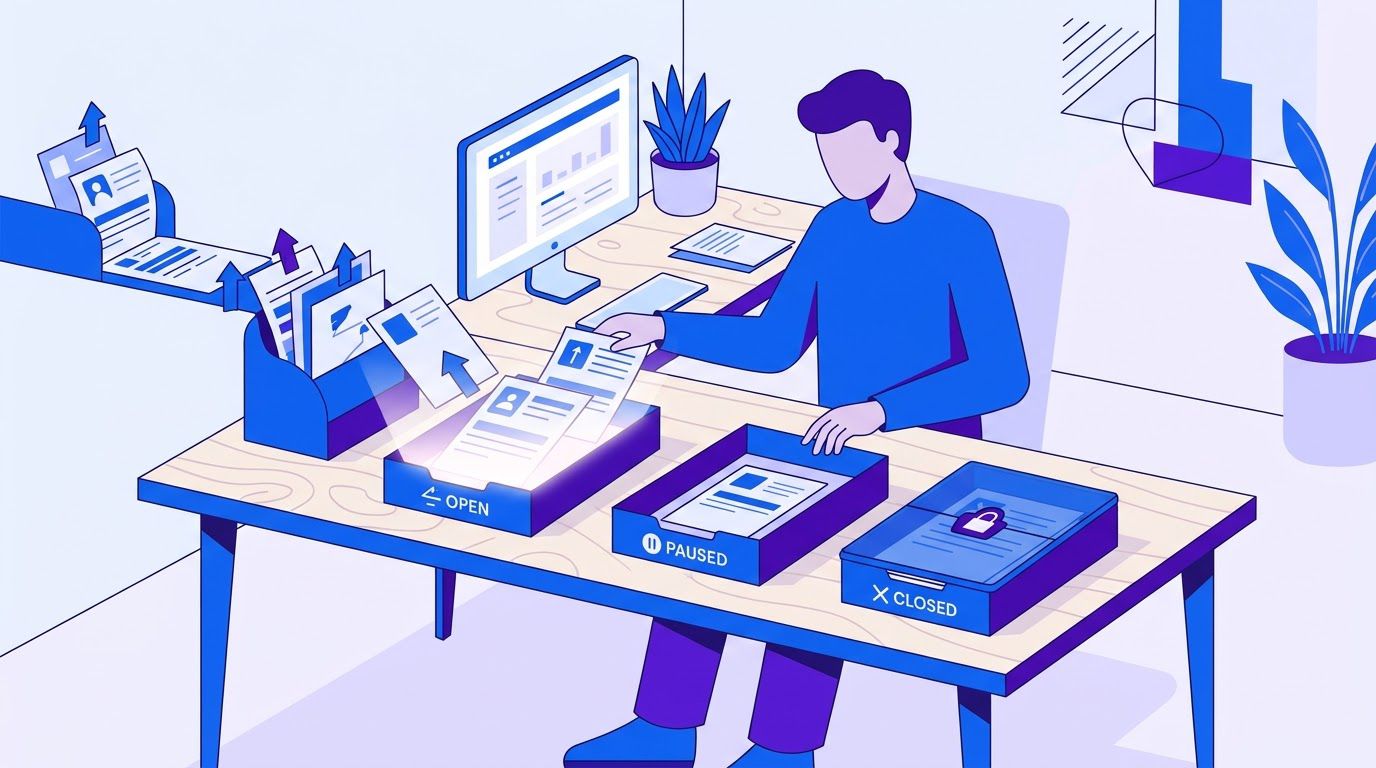
Picture a founder who sells automation projects of about $6,000 and handles every lead alone. On Tuesday he spends 45 minutes on a call with a friendly operations manager who says, "This is exactly what we need. Can you send me a deck?" He sends the deck. Nothing comes back. On Thursday he spends 45 minutes with someone else who mentions a problem costing the team half a day a week, a deadline in six weeks and a boss who signs off on anything under $10,000. He leaves that call without a next step, because he forgot to ask who decides. (This is an illustration, not a case study.)
Both calls felt productive. Only one was. Lead qualification is the habit of finding out, early and cheaply, which conversations deserve your next hour. The well-known frameworks for it were built for teams with an SDR function, a sales process and a CRM someone maintains. This guide gives you a five-question lead qualification framework for solo sellers, a three-level score (GO, NURTURE, DISQUALIFY) with explicit rules, a call notes template you can use today, a list of false signals, and a plan for routing each lead where it belongs.
A note on what this is. The five questions, the scoring and the templates are our own construction, informed by the public descriptions of BANT and MEDDIC (cited at the end with the date we read each). We have not validated this method on real deal data, and no win rates are claimed. The scores are a way to make a judgment explicit, not a prediction. Every person, company and note in an example is invented and labeled. A method like this only becomes reliable once you compare scores with your own outcomes, and Section 7 shows how.
- BANT and MEDDIC were not written for you. BANT dates from IBM in the 1950s according to Capterra. MEDDIC comes from PTC in 1996 and is aimed at complex, multi-stakeholder deals.
- Ask five things in every first call: the problem, its impact in numbers, who decides and how, what is driving the timing, and what the alternative is.
- Score each from 0 to 2 and route by explicit rules: GO, NURTURE or DISQUALIFY. A GO needs a real problem, a measured impact and a date.
- Write the answers in the call notes themselves. Qualification that lives in a separate step will not get done.
- Watch for false signals, like "send me a deck," and check your scores against outcomes after about twenty deals.
- What lead qualification is, and why BANT and MEDDIC fit a solo seller badly
- The five questions that qualify a lead
- The three-level score: GO, NURTURE and DISQUALIFY
- Building qualification into your call notes (template included)
- False signals: "send me a deck" and other traps
- Automating the routing: CRM tags, sequences and workflows
- Checking whether your scoring works
- A two-week rollout plan
- When it is time to hand it to someone
- Frequently asked questions
- Sources
What lead qualification is, and why BANT and MEDDIC fit a solo seller badly
Lead qualification is the process of deciding whether a lead is worth the time of your sales process, usually by checking fit and readiness to buy. It sits between getting an enquiry and spending serious effort on a proposal. For a solo seller it is mainly a time-allocation decision: you have a few good hours a day, and every call has an opportunity cost.
What BANT is, and where it comes from
BANT stands for budget, authority, need and timeline. A Capterra article by Lauren Spiller (published June 6, 2023, read November 11, 2026) says IBM created it in the 1950s. The same article lists limits that matter for a small seller: Gartner is quoted as calling BANT inadequate because it does not recognize emerging demand signals, treating the four items as a checklist overlooks the original purpose of prompting real conversations, relying on it risks favoring the buyers who are already best informed, and the article argues that a timeline is not a valid reason to disqualify a lead because timelines change. In its own survey of 244 US sales and business development respondents (April 2023), 52% of those who use BANT called it reliable. That figure is self-reported opinion from BANT users, not evidence about outcomes.
What MEDDIC is, and where it comes from
MEDDIC has six elements: metrics, economic buyer, decision criteria, decision process, identify pain and champion. According to the MEDDICC site (page dated November 9, 2026, read November 11, 2026), it was created in 1996 inside PTC by Dick Dunkel, working under SVP John McMahon alongside Jack Napoli, to address sales-team attrition at a company with about 300 reps. Later versions added competition and paper process, giving MEDDPICC. A Salesforce article (read November 11, 2026) calls MEDDIC a fit for high-cost products and complex, multi-stakeholder deals, notes that its elements are not sequential steps, and says adopting it takes work: defined buyer personas, training, a CRM and step-by-step guidance for reps.
Why neither fits a solo seller selling a small deal
| BANT | MEDDIC | Five-question method | |
|---|---|---|---|
| Built for | Short sales processes, a team qualifying leads | Complex deals with several decision-makers | One person qualifying their own leads |
| Number of items | 4 | 6 | 5 |
| Strength | Fast and simple | Rigorous on process and buyer | Fits inside a first call and the notes |
| Weakness for a solo seller | Checks budget and timeline too early and can reject good-fit leads | Heavy for a small deal, and assumes a long cycle | Not validated on real data; you tune it with yours |
| Typical first-call effort | Four questions | Six areas, often over several calls | Five questions in about 12 minutes |
There is nothing wrong with either framework. The mismatch is the setting. A solo seller with a $6,000 offer cannot run a multi-call discovery for every lead, and cannot afford to reject a buyer with a real problem because they do not yet have a number in the budget cell.
The arithmetic of unqualified calls
The numbers are invented. Replace them with yours. A seller takes 15 first calls a week, each about 40 minutes: 15 × 40 = 600 minutes, or 10 hours. Suppose 4 of those 15 calls (27%) are with people who were never going to buy. That is 4 × 40 = 160 minutes, or 2 hours 40 minutes a week. At $60 an hour of opportunity value that is about $160 a week, before the cost of the proposals sent to those same leads.
The point is not the exact figure. It is that a few questions asked in the first ten minutes of the call, or on a short form before it, can move that time to leads who are ready.
The five questions that qualify a lead
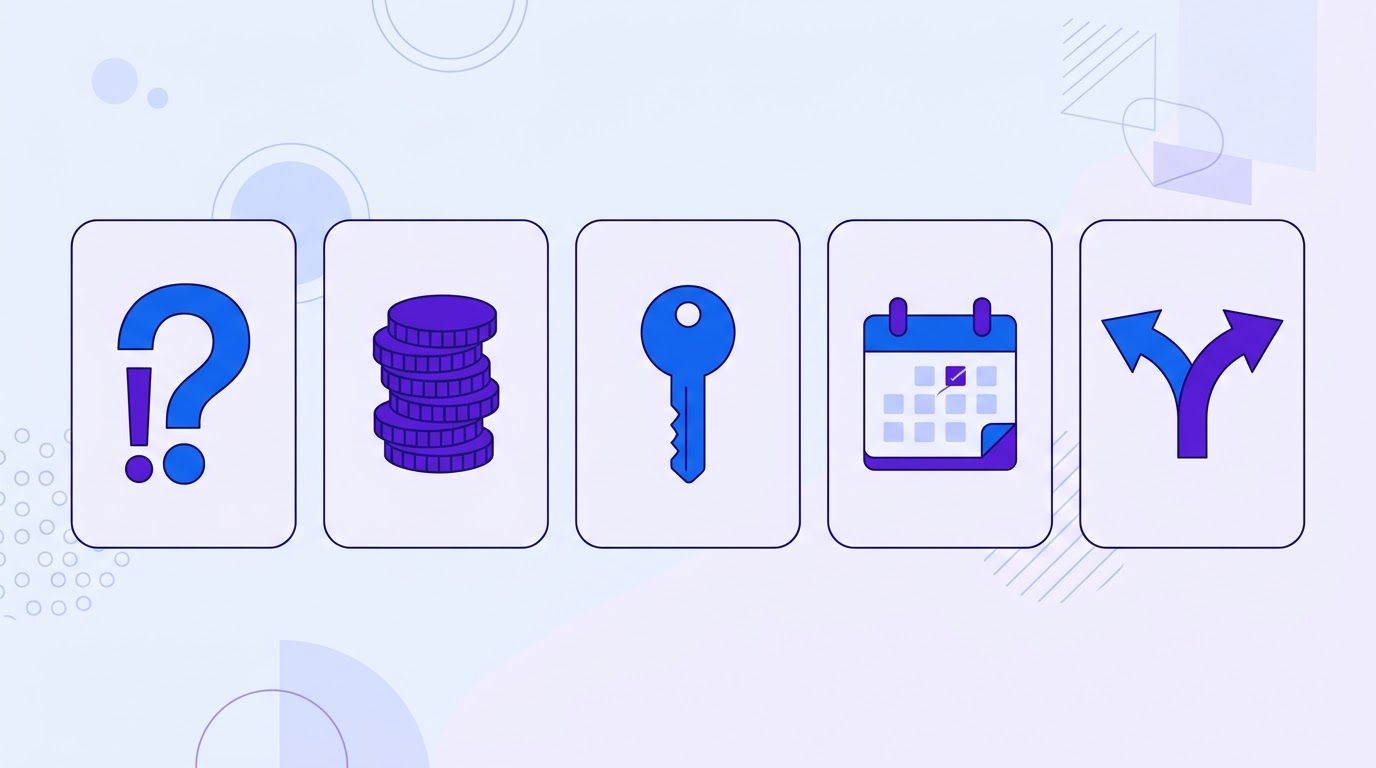
The five questions are problem, impact, authority, timing and alternative. They replace BANT’s budget and MEDDIC’s six areas with five things a solo seller can actually learn in a first call. For each one you get the purpose, the wording to use, what a strong answer sounds like, a red flag, and how it scores from 0 to 2.
Question 1: Problem. What is not working today?
Purpose: confirm that there is a real problem, in the buyer’s words, not yours. Ask: "What made you reach out now? What is not working at the moment?" Then ask for an example: "Can you walk me through the last time that happened?"
| Score | What you heard |
|---|---|
| 0 | No problem named, or curiosity about what you do. |
| 1 | A problem mentioned in general terms, with no example. |
| 2 | A specific problem described with a recent example, in their own words. |
Red flag: the buyer repeats your marketing language back to you. People with a real problem describe symptoms, not categories.
Question 2: Impact. What does it cost you?
Purpose: see whether the problem is large enough to justify the project. Ask: "Roughly how much time or money does this take each week or month? What happens when it goes wrong?" Let them estimate. A rough number is enough, and you write it down exactly as they said it.
| Score | What you heard |
|---|---|
| 0 | No cost, effort or risk named. |
| 1 | A qualitative impact: "It takes a lot of time." |
| 2 | A number, even a rough one: hours, dollars, lost deals or errors. |
Why it matters: this replaces the budget question. A buyer who can put a cost on the problem can usually find the money. A buyer who cannot will compare you with doing nothing, and doing nothing is free.
Question 3: Authority and process. Who decides, and how?
Purpose: find the path to a yes. Ask: "If this looks right to you, what happens next on your side? Who else needs to be involved, and how are decisions like this normally made?" This borrows from MEDDIC’s economic buyer and decision process, in one sentence.
| Score | What you heard |
|---|---|
| 0 | No path to a decision-maker, or "I will look into it." |
| 1 | The contact influences the decision. The decision-maker is named but you have not met them. |
| 2 | The contact decides, or the decision-maker will join the next call, and you know how it gets approved and paid. |
Red flag: "I will pass it along." You do not control what that sentence turns into. Offer to join a short call with the person who decides.
Question 4: Timing. What is driving the date?
Purpose: distinguish a purchase from a wish. Ask: "Is there a date or an event that makes this urgent? What happens if it is still unsolved in three months?" Do not use timing to reject a lead outright, as the Capterra article cautions. Use it to decide where the lead goes.
| Score | What you heard |
|---|---|
| 0 | No date and no trigger. |
| 1 | A vague timeframe: "this year," "when things calm down." |
| 2 | A specific event or date that forces a decision: a launch, an audit, a hire, a contract ending. |
Question 5: Alternative. What happens if they do nothing, and what else are they considering?
Purpose: understand what you are really competing with. Ask: "What would you do if you did not hire us? Have you looked at other options, or at doing it in-house?" For many small deals the main competitor is the spreadsheet and the status quo, not another seller.
| Score | What you heard |
|---|---|
| 0 | You do not know what they would do instead. |
| 1 | You know either the status quo or one alternative. |
| 2 | You know the status quo and the alternatives, and why they are still talking to you. |
A short list of lead qualification questions to keep nearby
- What made you reach out now?
- Can you walk me through the last time this went wrong?
- How much time or money does it cost you each month, roughly?
- Who else needs to be involved in a decision like this?
- What happens next on your side if this looks right?
- Is there a date or event that makes this urgent?
- What would you do if you did not hire anyone for this?
- Have you looked at other options?
Do not read them as a script. The best qualification feels like a conversation about their situation, and you take notes as it goes. If you want a first-touch message that opens a conversation like this, our guide to AI prospecting that does not sound like AI covers the research behind it.
The three-level score: GO, NURTURE and DISQUALIFY

Scoring turns five answers into a decision. Each question gets 0, 1 or 2, so a lead scores between 0 and 10. The score is not the point. The rules are: they make you decide the same way on a tired Friday as on a fresh Monday, and they leave a record you can review later.
The rules, in order
- DISQUALIFY if the Problem score is 0, or if the total is 3 or less.
- GO if the total is 7 or more and Problem is 2 and Impact, Authority and Timing are each at least 1.
- NURTURE in every other case.
The order matters. A lead with no problem is out whatever else it scores. A lead can have a high total and still not be a GO if the impact is unknown or nobody who can decide is in sight, which is exactly the case where a proposal is a waste of a day.
| Outcome | What it means | Your next action | Time limit |
|---|---|---|---|
| GO | A real, measured problem with a path to a decision and a reason to act | Book the next step on the call itself and send a proposal or a scoped next call | Within 24 hours |
| NURTURE | A real interest with something missing: impact, authority or timing | Write down the missing piece, set a check-in date tied to their trigger, send something useful | Check-in date set before you hang up |
| DISQUALIFY | No problem you can solve, or too little signal to justify more time | Close politely, offer a pointer or a resource, tag and move on | Same day |
The rule as a spreadsheet formula
If you keep leads in a sheet, put the five scores in columns B to F (Problem, Impact, Authority, Timing, Alternative) and this formula in column G. It implements the three rules above exactly.
=IF(OR(B2=0,SUM(B2:F2)<=3),"DISQUALIFY",
 IF(AND(SUM(B2:F2)>=7,B2=2,C2>=1,D2>=1,E2>=1),"GO","NURTURE"))
The Alternative score counts toward the total but is never a gate on its own. That is deliberate: not knowing the alternative should lower your confidence, not end the conversation.
Three worked examples
All three leads are invented. They show the rules at work, not what real conversations look like.
| Lead | Problem | Impact | Authority | Timing | Alternative | Total | Outcome |
|---|---|---|---|---|---|---|---|
| A. Operations lead, 40-person distributor. Re-keys orders from email, about 6 hours a week, new hire starts in 5 weeks, owner approves under $10k. | 2 | 2 | 1 | 2 | 1 | 8 | GO |
| B. Office manager, 12-person agency. Reports get built by hand each month, "sometime this year," reports to a partner who has not been mentioned. | 2 | 1 | 1 | 0 | 1 | 5 | NURTURE |
| C. Manager who loved the call and asked for a deck. No example of a problem, no number, no one else involved. | 1 | 0 | 0 | 1 | 0 | 2 | DISQUALIFY |
Lead B is the one people mishandle. There is a real problem, so it feels wrong to drop it, and the date is vague, so it feels wrong to chase it. NURTURE gives it a job: find out who the partner is and what the monthly deadline looks like, then schedule the check-in just before the next reporting cycle. Lead C is not a bad person. The score says the next hour is better spent elsewhere.
Why not just add up a score and call it a day
Because totals hide gaps. Two leads can both score 7, and one has a measured problem with no date while the other has a date and a vague complaint. The gates (Problem 2, Impact, Authority and Timing each at least 1) are what keep a GO honest. If you find yourself wanting to override a result, write down why. Overrides are data: after twenty or so deals you will see whether you are overriding in one direction, and that tells you which rule to change.
- Scoring on how much you liked the call. Score what was said, not the mood.
- Filling in the numbers after the call from memory. Do it during the call, or within ten minutes.
- Rounding up. If you have to argue for a 2, it is a 1.
- Using DISQUALIFY as a verdict on the person. It is a verdict on the next hour of your time. People return, and your notes will say why you paused.
- Leaving NURTURE without a date. A nurture lead with no check-in date is a disqualified lead you have not admitted to yet.
Building qualification into your call notes (template included)
This is the part that decides whether the framework survives. A separate qualification step, a form you fill in after the call, is the first thing that gets skipped when you are busy. So we put the five questions inside the notes you already take and let the score fall out of them.
The one-page call notes template
Copy this into your notes app, CRM note field or a sheet. It has a header, five answer blocks, a score line and a next-step line. Fill it in during the call, in the buyer’s words where you can.
LEAD: [name, company, role]        DATE: [date]       SOURCE: [where they came from]

1. PROBLEM  (0-2)  Score: __
   Their words: "..."
   Last example: ...

2. IMPACT  (0-2)  Score: __
   Cost in time / money / errors: ...
   Said exactly: "..."

3. AUTHORITY AND PROCESS  (0-2)  Score: __
   Who decides: ...
   How it gets approved and paid: ...
   Can the decision-maker join the next call? Y / N

4. TIMING  (0-2)  Score: __
   Trigger or date: ...
   What happens if still unsolved in 3 months: ...

5. ALTERNATIVE  (0-2)  Score: __
   Status quo: ...
   Other options considered: ...

TOTAL: __ / 10      OUTCOME: GO / NURTURE / DISQUALIFY
MISSING PIECE (if NURTURE): ...
NEXT STEP: [action]  BY: [date]
A filled-in example
Everything below is invented, including the person and the company. It shows how short a good set of notes can be.
LEAD: Dana R., Brightline Supply, operations lead   DATE: Nov 9   SOURCE: request form

1. PROBLEM  2   "Orders come in by email and we retype them into the system."
   Last example: Monday's 31 orders, two typed wrong, one shipped late.

2. IMPACT  2   Roughly 6 hours a week, plus about two corrections a week.
   Said exactly: "It is most of one person's Monday."

3. AUTHORITY AND PROCESS  1   Dana recommends, owner (Marcus) approves anything
   under $10k by email. Marcus can join a 20-minute call. Pays by invoice, net 15.

4. TIMING  2   New hire starts Dec 14. Wants it working before then.

5. ALTERNATIVE  1   Considered hiring a second data-entry person. Has not looked
   at other sellers.

TOTAL: 8 / 10   OUTCOME: GO
NEXT STEP: send scope summary and book a call with Marcus   BY: Nov 10
Four habits that make the notes work
- Write the score as you go. After each answer, put the number down before you ask the next question. It takes three seconds and removes the guesswork afterward.
- Quote, do not paraphrase. The buyer’s exact words are what you will use in the proposal, and they are what jog your memory a month later.
- Leave blanks blank. An empty block tells you what you still have to find out. It is information, not failure.
- End with a next step and a date, always. If the call ends without one, the outcome is NURTURE at best.
If you cannot ask all five questions live
Some leads arrive through a form or an email and will not give you a call yet. Put the first three questions on your request form in plain words ("What is not working? Roughly how much time does it cost? Who else is involved in the decision?") and read the answers before you reply. A form answer is rarely a 2 on any question, and that is fine: it is enough to decide who gets a call this week. Timing and alternative are better asked live, where you can follow up.
If you record or transcribe calls, check the consent rules that apply where you and the buyer are before you do. They vary by place and we are not lawyers, so this is a point to confirm with a professional, not a detail to assume.
A spreadsheet that ranks your repetitive tasks by what is worth automating first. List the task, rate how often it happens, how long it takes, how error-prone it is and how many tools it touches, and the sheet orders your list. Enter your email below and we will send the download link.
False signals: "send me a deck" and other traps
A false signal is something a buyer says or does that feels like interest and predicts nothing. They are polite, common and expensive. Each one below comes with what is probably going on and a question that turns it into real information. These are patterns we have seen discussed in sales writing and are common sense, not measurements, so treat them as prompts, not laws.
| What you hear | What it usually means | What to ask instead |
|---|---|---|
| "Send me a deck." | A polite way to end the call, or a request to pass something to someone you have not met. | "Happy to. Who will be reading it, and what would they need to see to say yes or no?" |
| "This is exactly what we need." | Enthusiasm, not a problem. No example, no cost. | "What is the last thing that went wrong that made you say that?" |
| "We have no budget right now." | Either a polite no or a real constraint. The Capterra article argues out-of-budget need not end the conversation. | "If it fixed the problem, what would the problem be worth to you each month?" |
| "Let me run it by my boss." | You are about to be represented by someone who does not know your offer. | "Could we do 15 minutes with them so I can answer questions directly?" |
| "Can you give me a rough price?" | A comparison shopper, or a person testing whether it fits. Not always bad. | "Gladly. To give a useful number, what is the task and how much time does it take now?" |
| "Call me next quarter." | Sometimes a real timing, sometimes a brush-off. | "What happens between now and then that makes next quarter the right time?" |
| Ghosting after a warm call | Priorities moved, or there was never a path to yes. | Not a question. Check your notes: was authority a 0 or a 1? |
| Many people on the call, none deciding | A research session, or a committee with no champion. | "Who will make the final decision, and what do they care most about?" |
The pattern behind most traps
Nearly every false signal has the same structure: a positive feeling with no problem, no number, no decision-maker and no date. The five questions are built to catch exactly that. If you can complete the notes template with quotes and numbers, the signal is real. If the blocks stay empty after a warm hour, you had a pleasant conversation.
What to do with a false signal you already have
- Re-score from your notes. If you did not take any, score it honestly from memory and expect a low number.
- Send one message that asks the missing question, not another version of your pitch.
- Set a short deadline for yourself, such as two weeks. After that, move it to NURTURE with the date and stop thinking about it.
Automating the routing: CRM tags, sequences and workflows
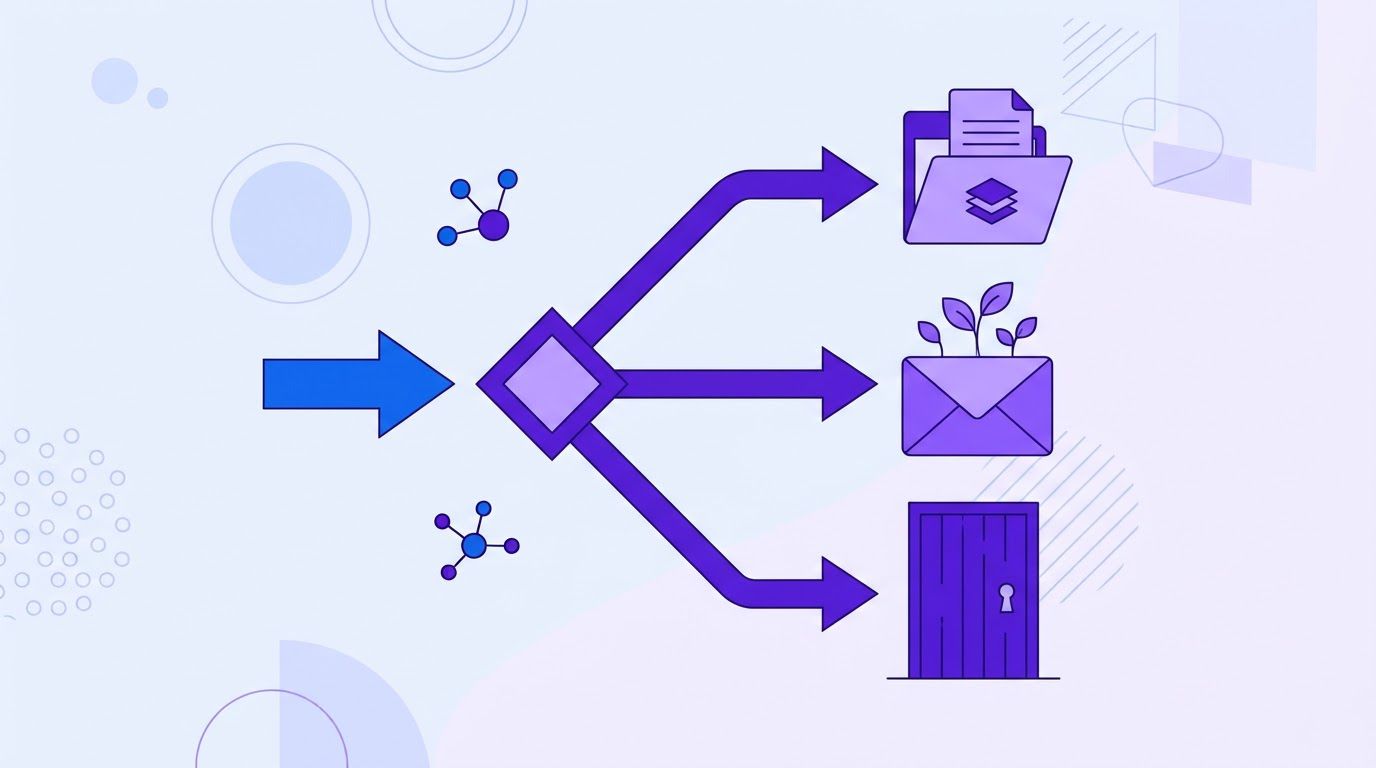
Once a lead has a score, the next step should happen without you having to remember it. Routing is the bridge between the notes and the action: each outcome gets a tag, each tag starts a sequence, and each sequence has a person-owned exit. You can do all of it by hand in a spreadsheet. The automation only saves time once the manual version already works.
Step 1: tag every lead with the outcome and the missing piece
Use a small, fixed set of tags so reports stay readable. Whatever CRM or sheet you use (Google Sheets (may be an affiliate link) is enough to start), keep these fields on every lead:
| Field | Values | Why |
|---|---|---|
| Outcome | GO, NURTURE, DISQUALIFY | Drives the sequence. |
| Total score | 0 to 10 | For review later. |
| Missing piece | Impact, Authority, Timing, Problem, none | Tells the follow-up what to ask. |
| Trigger date | A date from the Timing answer | Sets the next check-in. |
| Next step and date | Free text and a date | Nothing is left without an owner. |
Step 2: one sequence per outcome
| Outcome | Sequence | Exit |
|---|---|---|
| GO | Same-day recap email with the five answers in the buyer’s words. A scoped proposal or next-call invite within 24 hours. One reminder after three working days. | A decision, or a person-written close after the reminder. |
| NURTURE | A thank-you with one useful resource tied to their problem. A check-in booked for the day before their trigger date, aimed at the missing piece. | The lead moves to GO, goes back to NURTURE with a new date, or becomes DISQUALIFY after two check-ins with no change. |
| DISQUALIFY | A short, kind close. Optionally a pointer to a resource or someone better placed. No further sequence. | The lead comes back only if they reach out again. |
Here is the recap email for a GO. It repeats the buyer’s own words, which is what makes it read as attention rather than a template.
Subject: Recap and next step, [their problem in 4 words]

Hi [Name],

Thanks for the time today. Here is what I took away:

- The problem: "[their words]"
- What it costs you: [their number, as they said it]
- What is driving the date: [trigger]
- Who decides, and how: [name, process]

Next step: [proposal / call with decision-maker] by [date].
If I have anything wrong above, tell me and I will correct it.

[Your name]
And a NURTURE check-in, which asks for the one thing that is missing instead of asking if they are ready.
Subject: Quick question before [their trigger date]

Hi [Name],

You mentioned [trigger] is coming up in [month]. One thing I did not catch on our call: [the missing piece, e.g. who signs off on something like this].

Whenever it is useful, a 10-minute call would settle it, and I can send something concrete after that. If the timing has moved, that is fine too.

[Your name]
Step 3: where an n8n workflow can help
Several workflows already on this site cover pieces of this routing. They are published with importable JSON, and each can be a starting point, but none of them implements the five-question score as it stands. Adapting one is a customization, and the descriptions below come from each entry:
- The AI email autoresponder with lead classification watches a mailbox over IMAP, asks a model whether a message is a lead, drops the ones that are not and writes and sends a reply through Gmail. The classification step is where a GO, NURTURE or DISQUALIFY rule from this guide could be added, and its guide discusses how fragile that kind of build is.
- The AI email assistant for Gmail that classifies and routes sorts incoming mail into five categories and sends each to a dedicated agent. It is a larger build (53 steps, according to its entry) and shows the routing idea at a bigger scale.
- The AI email responder with RAG searches a knowledge base before it writes a reply, which is the pattern to look at if you want answers drawn from your own offer descriptions. Its entry lists known problems, so read it before reusing it.
- The LinkedIn lead scoring and outreach workflow shows scoring on the top of the funnel, before any call, using public profile information.
- For leads already in a CRM, the Zoho CRM data quality audit workflow and the workflow that flags slowing Zoho deals are the checks that keep your tags honest after the first week.
Two related guides: our missed lead follow-up system covers the speed side of the same problem, and our guide to AI cold email that does not sound like AI covers the first message that starts a conversation like the ones scored here.
Rules for automating qualification
- Let the workflow tag, not decide. A model can suggest a score from the notes. A person confirms it before a GO sequence starts.
- Never auto-send a DISQUALIFY message. It is the one email that damages a relationship if the score was wrong.
- Log every override. The reasons are what improve the rules.
- Keep the workflow away from information you would not put in an email. Check what a third-party model receives before you connect your notes to it.
- Send nothing at all before you have confirmed what you are allowed to send. Rules on commercial email differ by country and state.
If you would like the five questions, the score and the three sequences wired into your own notes, sheet or CRM, describe it on the request page. We review it, send a quote, and you decide whether to go ahead.
Checking whether your scoring works
This is the section most qualification guides skip, and the reason we do not quote conversion rates for the method. We have no outcome data for it, and any number we gave would be invented. You can build your own evidence with a simple log and a few dozen leads.
The log
Keep one row per scored lead with the five scores, the total, the outcome and, later, the result. Add two columns: Result (Won, Lost, Went quiet, Still open) and Days to result.
| Lead | P | I | A | T | Alt | Total | Outcome | Result | Days |
|---|---|---|---|---|---|---|---|---|---|
| L-01 (invented) | 2 | 2 | 1 | 2 | 1 | 8 | GO | Won | 11 |
| L-02 (invented) | 2 | 1 | 1 | 0 | 1 | 5 | NURTURE | Won | 47 |
| L-03 (invented) | 1 | 0 | 0 | 1 | 0 | 2 | DISQUALIFY | n/a | n/a |
| L-04 (invented) | 2 | 2 | 2 | 2 | 2 | 10 | GO | Lost | 9 |
What to look at after about twenty scored leads
- Won rate by outcome. If GO leads do not win more often than NURTURE leads, the rules are not separating anything.
- GO leads that were lost. Which of the five scores was a 1 or a guess? That is your weakest question.
- NURTURE leads that won. Which gate kept them out of GO? If it is always Timing, you may be gating too hard on it.
- Your overrides. If you keep upgrading leads the rules call NURTURE and winning them, change the rule, not your habit.
- Time spent. Compare the hours per week on GO leads with the hours on everything else.
Twenty leads is a small sample, and a few wins or losses can swing any percentage. Read the log for patterns you can explain, not for a verdict. If you sell only a few deals a quarter, the log still helps with the qualitative review (which question you were weakest at) long before it helps with the numbers.
The figures are invented to show the reasoning. They are not a benchmark. Suppose after 24 scored leads, 8 were GO, 11 NURTURE and 5 DISQUALIFY. Of the 8 GO leads, 4 won. Of the 11 NURTURE, 2 won. A careful reading: GO wins more often in this tiny sample, but 4 of 8 and 2 of 11 are numbers a few lucky weeks could produce. The more useful finding is in the notes: both NURTURE wins had a Timing of 0 on the first call and a trigger date that arrived later. That suggests keeping the Timing gate but shortening the check-in interval.
A two-week rollout plan
Do not try to adopt everything at once. Two weeks, five blocks, each small enough to finish in a sitting.
| Day | Task | Time |
|---|---|---|
| 1 | Copy the call notes template into your notes app or sheet. Read the five questions out loud once. | 20 min |
| 2 | Add the three tags and the trigger date field to your CRM or sheet. Paste the scoring formula. | 30 min |
| 3-5 | Use the template on every first call. Do not worry about scoring accuracy. Just fill it in. | During calls |
| 6 | Write the GO recap and the NURTURE check-in as saved templates. | 30 min |
| 7 | Review the week: which questions did you skip, and why? | 20 min |
| 8-12 | Run the full method. Send recap emails the same day. | During calls |
| 13 | Review the log. Look for the question you score least reliably and rewrite how you ask it. | 30 min |
| 14 | Decide what, if anything, to automate. Start with the tags, not the emails. | 30 min |
If you freeze at the thought of the whole plan, do only Day 1. Copy the template, and use it on your next call. The rest follows from having real notes.
When it is time to hand it to someone
You can run this method with a notes template and a sheet, and for a while you should. The point at which people look for help is usually consistency: the week with 20 leads instead of 5, the tags that stop being applied, the follow-up that depends on remembering.
At LeenLabs we build n8n workflows for tasks like this. The process is plain. You describe the task once on a single form, with where your leads arrive, where your notes live and the rules you want applied. We review it and send a quote. You pay 40% to start and the remaining 60% when we deliver the workflow. There is no bidding round and no profiles to compare. We do not promise a result in sales, because that depends on your offer and your market. What we deliver is a workflow that does what your request describes.
Tell us where leads come from, where you take notes and what should happen for each outcome. You get a quote, and you decide whether to go ahead.
To see how these workflows are put together first, browse the free workflows, which come with JSON you can import, or read more about us.
Frequently asked questions
What is lead qualification?
It is the process of deciding whether a lead is worth the time of your sales process, by checking fit and readiness to buy. For a solo seller it is mostly a decision about where to spend the next hour.
What is a lead qualification framework?
A fixed set of questions and rules you apply to every lead so that you decide consistently. BANT (budget, authority, need, timeline) and MEDDIC (metrics, economic buyer, decision criteria, decision process, identify pain, champion) are the best known. This guide offers a five-question version for solo sellers: problem, impact, authority, timing and alternative.
What does BANT stand for, and where does it come from?
Budget, authority, need and timeline. A Capterra article says it was created by IBM in the 1950s. The same article reports that Gartner calls it inadequate because it does not recognize emerging demand signals.
What is MEDDIC, and is it too much for a small team?
MEDDIC stands for metrics, economic buyer, decision criteria, decision process, identify pain and champion. The MEDDICC site says it came out of PTC in 1996, and Salesforce describes it as suited to high-cost products and complex deals with several decision-makers. For a small deal sold by one person it is usually more process than the deal can carry, but its ideas of an economic buyer and a decision process are worth borrowing, as the authority question here does.
BANT vs MEDDIC: which should I use?
Neither exactly, if you sell small deals alone. BANT is quick but checks budget and timeline early and can discard buyers with a real problem. MEDDIC is thorough but assumes long, multi-person deals. The five-question method keeps what travels from both: a real problem, a measured impact, a path to a decision and a date.
What are good lead qualification questions?
Ask what made them reach out now, how the last occurrence went, what it costs in time or money, who else is involved in the decision, what is driving the date and what they would do if they did not hire anyone. Section 2 has the wording and the scoring for each.
How do I qualify a lead without a budget answer?
Ask about the impact instead. A buyer who can put a number on the cost of the problem can usually find money for a solution priced below it. The Capterra article makes a related point: being out of budget today need not end the conversation.
What should I do with a lead that is not ready?
Tag it NURTURE, write down what is missing and set a check-in date tied to their trigger. Send something useful, not a generic follow-up. After two check-ins with no change, close it politely.
Can I automate lead qualification?
Parts of it: tagging, reminders, recap emails and sorting incoming enquiries. Keep a person on the decisions, especially the GO and DISQUALIFY outcomes. Section 6 lists published workflows you can adapt and rules for doing it safely.
Does this method work?
We have not validated it on real deal data, and we do not claim win rates. It is a structured way to make a judgment explicit. Section 7 shows how to test it on your own leads after about twenty deals.
Sources
- Capterra, Lauren Spiller, Is the BANT Framework Still Effective in Qualifying Leads?. Published June 6, 2023; read November 11, 2026. BANT as budget, authority, need and timeline; the statement that IBM created it in the 1950s; the Gartner quote on inadequacy; the argument that timeline is not a valid reason to disqualify; the Capterra survey of 244 US sales and business development respondents (April 2023), of whom 52% of BANT users called it reliable. Capterra is a software review site, and the survey figure is self-reported opinion.
- MEDDICC, Who created MEDDIC. Page dated November 9, 2026; read November 11, 2026. Origin at PTC in 1996 with Dick Dunkel, John McMahon and Jack Napoli; the six elements; MEDDPICC additions. A site run by a firm that sells MEDDICC training, so treat its framing as an interested source.
- Salesforce, MEDDIC sales. Read November 11, 2026. BANT as suited to short sales processes and for ignoring buying committees; MEDDIC elements as not sequential; suitability for high-cost products. Salesforce sells CRM software.
- Created by us, not validated: the five questions, the 0-2 scoring, the GO, NURTURE and DISQUALIFY rules, the notes template and the formula. We checked that the formula and rules give the same outcomes for the three example leads. Every person, company and note in the examples is invented.
- Not found and therefore not quoted: win-rate figures for BANT, MEDDIC or this method, benchmarks for the cost of unqualified calls, and any reliable data on conversion for solo sellers.
- About Us: who we are and how we work
- Free Workflows: n8n workflows with JSON you can import
- Request a Custom Workflow: describe a task and get a quote
- Terms of Service
- Privacy Policy
This article is general information and not legal, tax or financial advice. Laws and rules differ by country and state and change over time. Check with a qualified professional about your own situation.